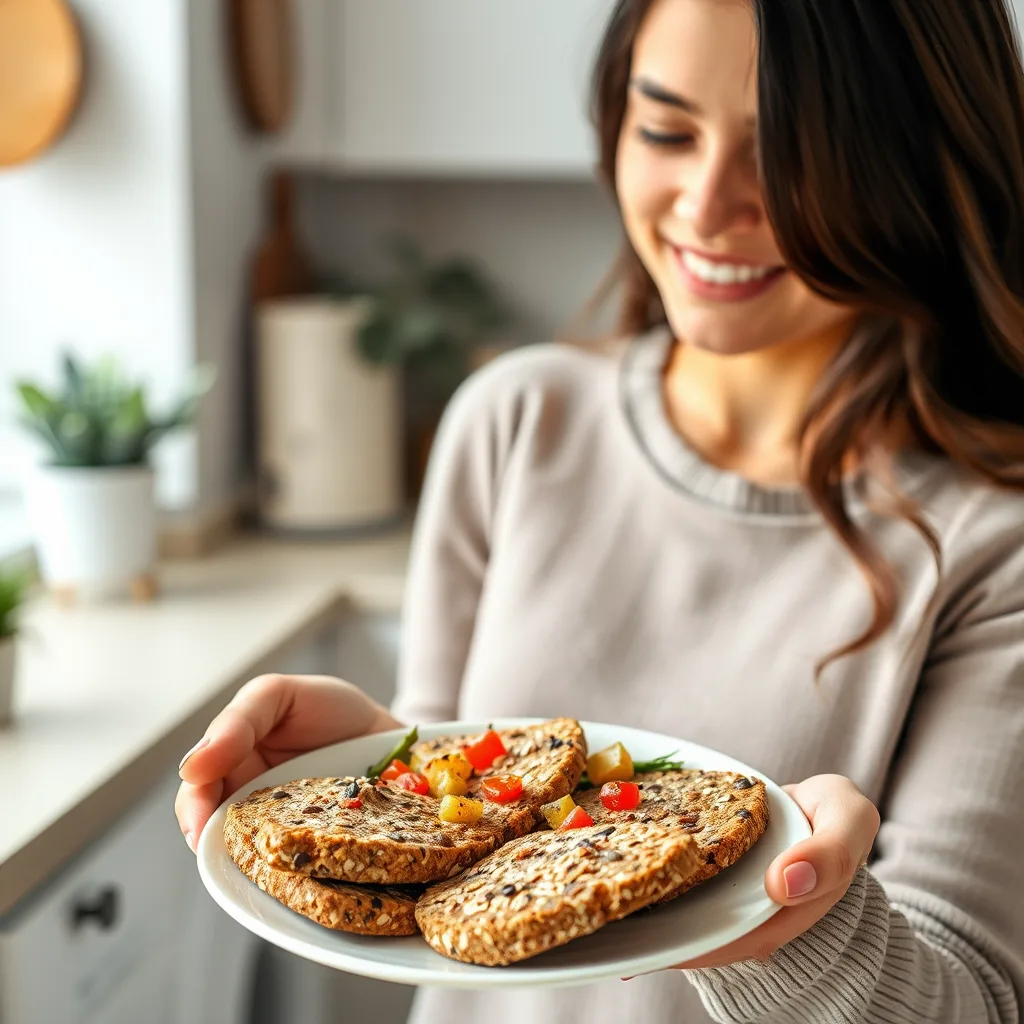
These vegan flax breads are my answer to store-bought bread that comes with a label full of things you did not ask for. Made from just soaked flaxseed and fresh vegetables, they are blended, spread thin and dried in a dehydrator until they become flexible, chewy crisps. The source recipe gives one tray at a time — flax plus peppers, or beets and carrots for a sweeter, earthier version.
This flax bread recipe is one of the most rewarding dehydrator recipes I know. The flax is soaked overnight so it blends into a thick porridge, then loosened with water until it spreads smoothly across the tray. Vegetables are folded in raw, which keeps their flavor bright. After 24–28 hours at low heat, the layer settles from 0.5 cm to just 2–3 mm of concentrated, nutty crispness.
Use these flaxseed crackers as an open-faced vegan sandwich alternative, break them into shards for a snack board, or even use the sheet as a raw pizza crust. Because everything stays below 40°C (104°F), the breads count as raw food snacks — a genuinely useful thing to have in the pantry.
Why You’ll Love These Vegan Flax Breads
These vegan flax breads replace commercial bread with three ingredients and patience. Flax brings omega-rich nutrition and a naturally binding texture, while the vegetables — peppers, beets or carrots — let you tune the flavor and color of every batch. The dehydrator does the work unattended, so the recipe is mostly hands-off after blending. The finished breads are thin, flexible and versatile: sandwiches, snack crackers, pizza base, or rolls while still warm. They are naturally gluten-free, fully raw, and keep far better than fresh bread. If you own a dehydrator, this flax bread recipe is the one that earns its shelf space.
Storage Notes
The finished sheet is cut into free-form pieces, or rolled into tubes while still warm, depending on how dry you like them (from the source).
Pro Tips
- Soak the flaxseed overnight before blending — dry flax will not give you the thick, smooth porridge the recipe needs.
- Blend the flax gradually with added water so the mixture stays smooth and does not overload the blender.
- Spread the batter at an even 0.5 cm (1/4 in) layer; an even spread dries evenly and gives uniform crackers.
- Dry at 36–40°C (97–104°F) for 24–28 hours — the layer settles to about 2–3 mm when it is done.
- Roll the sheet into tubes while it is still warm for breadstick-style snacks, or cut cooled sheets into crackers.
FAQ
Do I need a dehydrator for flax breads?
The recipe is written for a dehydrator, which keeps the temperature below 40°C (104°F) so the breads stay raw. An oven on its lowest setting can work in a pinch, but it dries faster and is harder to control.
Are flax breads gluten-free?
Yes — the base is just flaxseed and water with fresh vegetables, so there is no gluten anywhere in the recipe. As always, check that your added seasonings are certified gluten-free if needed.
Which vegetables work best?
The source suggests green and red bell peppers (two of each) or beets (three) with carrots (four) — and invites experimentation. Water-rich vegetables like zucchini work too; just squeeze out excess juice before folding them in.
How dry should the breads be?
That is up to you: dry them less for flexible wraps, longer for crisp crackers. The source notes the layer settles to 2–3 mm, and the warm sheet can be rolled into tubes either way.
Conclusion
A tray of vegan flax breads is one of the most useful things a dehydrator can make. This flax bread recipe turns soaked flaxseed and vegetables into thin, versatile sheets — crackers, wraps or a raw pizza crust — with no gluten, no eggs and no oil-heavy dough. Keep these flaxseed crackers in your rotation of raw food snacks and homemade crackers, and you will always have a clean, crunchy vegan sandwich alternative on hand. For more, try my Vegan Pizza Recipe with Pesto. For more, try my Vegetables in the Oven with Herbs. For more, try my Vegan Zucchini Waffles.
Recipe Card
Vegan Flax Breads with Vegetables
Ingredients
Method
- Soak the flaxseed in water overnight.
- Pour the soaked flax into a blender and whip until smooth, adding water gradually so the thick porridge blends easily without overloading the blender.
- Seed the vegetables and cut them into medium pieces (or larger, as you like).
- Mix the blended flax with the vegetables in a bowl using a spoon.
- Grease the dehydrator tray with oil and spread the mixture over it in an even 0.5 cm (1/4 in) layer.
- Dry at 36–40°C (97–104°F) for 24–28 hours, until the layer settles to about 2–3 mm and is ready to use.
- Remove the sheet and cut it into free-form pieces, or roll it into tubes while still warm, depending on how dry you like it.
Nutrition
Tried this recipe?
Let us know how it was!
Free e-book
22 Vegan Porridges
22 warm vegan porridge and grain bowls for every course of the day: millet, buckwheat, oats, rice, polenta, and sorghum, from sweet morning bowls to savory dinners. Free, straight to your inbox.
- Every recipe fits on one page: ingredients, plain steps and a photo of the finished dish.
- Dual measurements: grams with ounces, milliliters with fluid ounces, Celsius with Fahrenheit.
- No exotic ingredients: simple pantry basics from any grocery store.
Steady-Morning Breads, Gentler Glucose Curve
Warm low-carb breads pair naturally with a glucose-conscious table. Sliced alongside protein and good fats, they help breakfast become steady, unhurried energy.
- Almond-flour crumb stays tender
- Pairs with protein and fats
Educational culinary & wellness note — not medical advice. Reader-supported links may earn a small commission at no extra cost to you.





0 Comments