Mung bean stew is the kind of hearty vegan lunch that keeps you full for hours without weighing you down. Mung beans are an Indian legume prized for their nutrition – they contain 18 amino acids, including all the essential ones – and their naturally low calorie count makes them a favorite in light, everyday cooking. Here they are simmered and then folded into a sweet, smoky vegetable base of beetroot, carrots, and cabbage.
The method is forgiving and very much a one pot stew in spirit: soak the beans, boil them until tender, then build a spiced coconut oil stew with grated vegetables and tomato paste. This smoked paprika stew fills the kitchen with an incredible aroma, and the beetroot gives the whole pot a gentle sweetness that both kids and adults seem to love. It is also a budget friendly dinner – dried legumes and root vegetables are about as inexpensive as good food gets.
I make this mung beans recipe as a high protein vegan meal for busy weeks, since the flavors only deepen overnight. A bowl of this vegan comfort food is satisfying on its own, and it reheats perfectly. If you are looking for legume recipes that go beyond the usual chili and dal, this hearty vegan lunch deserves a spot on your list.
Why You’ll Love This Mung Bean Stew
This mung bean stew checks every box for everyday vegan cooking: it is cheap, deeply nourishing, and made in one pot. Mung beans cook faster than most legumes and digest gently, while the beetroot and carrots add sweetness and color. The spiced base brings warmth without heat, so it suits almost any palate, and the cabbage keeps some pleasant bite. It is a high protein vegan meal that works for lunch or dinner, and it is exactly the kind of vegan comfort food you will be glad to find in the fridge.
Pro Tips
- Soak the mung beans overnight – at least 12 hours – and rinse them well; a little baking soda (about 1/2 tsp (3 g)) in the soaking water softens the skins further.
- Do not salt the cooking water for the beans; salt slows softening and can leave the skins tough.
- Add the cabbage later in the stewing if you like it al dente, or earlier if you prefer it soft and melting.
- Add water a splash at a time while stewing – if the pot runs dry the vegetables can catch and burn on the bottom.
- Salt the stew only in the last couple of minutes; salting early toughens the beans and dulls the sweetness of the beetroot.
FAQ
Do I have to soak mung beans before cooking?
It is strongly recommended – soak them in plain water overnight or for at least 12 hours, then rinse and cook. Soaking cuts the cooking time to about 20 minutes and makes the beans much easier to digest.
What can I serve with mung bean stew?
It is a complete bowl on its own, but it is lovely with a spoon of cashew sour cream, some crusty bread, or rice. The original recipe also suggests topping it with pieces of nori seaweed for extra iodine and flavor.
Can I use other beans instead of mung?
Yes – red lentils or split mung beans work with less cooking time, while chickpeas or kidney beans need longer simmering. The vegetable base and spices suit them all.
Is mung bean stew healthy?
Very – mung beans are rich in protein, fiber, vitamins, and minerals, with a low calorie count. Combined with beetroot, carrots, and cabbage, this stew is a balanced, whole-food vegan meal.
Conclusion
This mung bean stew is really a beetroot stew at heart: sweet beetroot, smoky spices, and tender mung beans in a broth that tastes like it simmered all day. It is a budget friendly dinner, a high protein vegan meal, and genuine vegan comfort food all at once. Keep this mung beans recipe for cold evenings, meal prep a pot of this hearty vegan lunch on Sunday, and lean on it whenever you want one pot stew cooking with real payoff. Simple legumes, honest vegetables, and a little patience make all the difference. For more, try my Sorrel Soup with Beans and Jerusalem Artichoke. For more, try my Salad With Barley.
Recipe Card

Mung Bean Stew with Vegetables
Ingredients
Method
- Soak the mung beans in plain water overnight (at least 12 hours), optionally with 1/2 tsp (3 g) baking soda, then rinse them well under running water.
- Cook the drained mung beans in unsalted water for about 20 minutes after boiling until tender; do not worry if some beans fall apart.
- Meanwhile, peel the beetroot and carrot and grate them on a coarse grater or process them in a food processor.
- Heat the oil in a saucepan, add the spices, and once fragrant, fry the beetroot and carrot for a few minutes; pour in a little water and stew until tender.
- Add the shredded cabbage and the tomato paste (or grated fresh tomatoes) and continue stewing - add the cabbage early if you like it well cooked, or later for an al dente texture.
- Mix the cooked vegetables with the boiled mung beans and let everything simmer over low heat for another 5 minutes, adding water as needed so the stew does not stick.
- Salt the stew to taste a couple of minutes before it is ready and serve.
Nutrition
Tried this recipe?
Let us know how it was!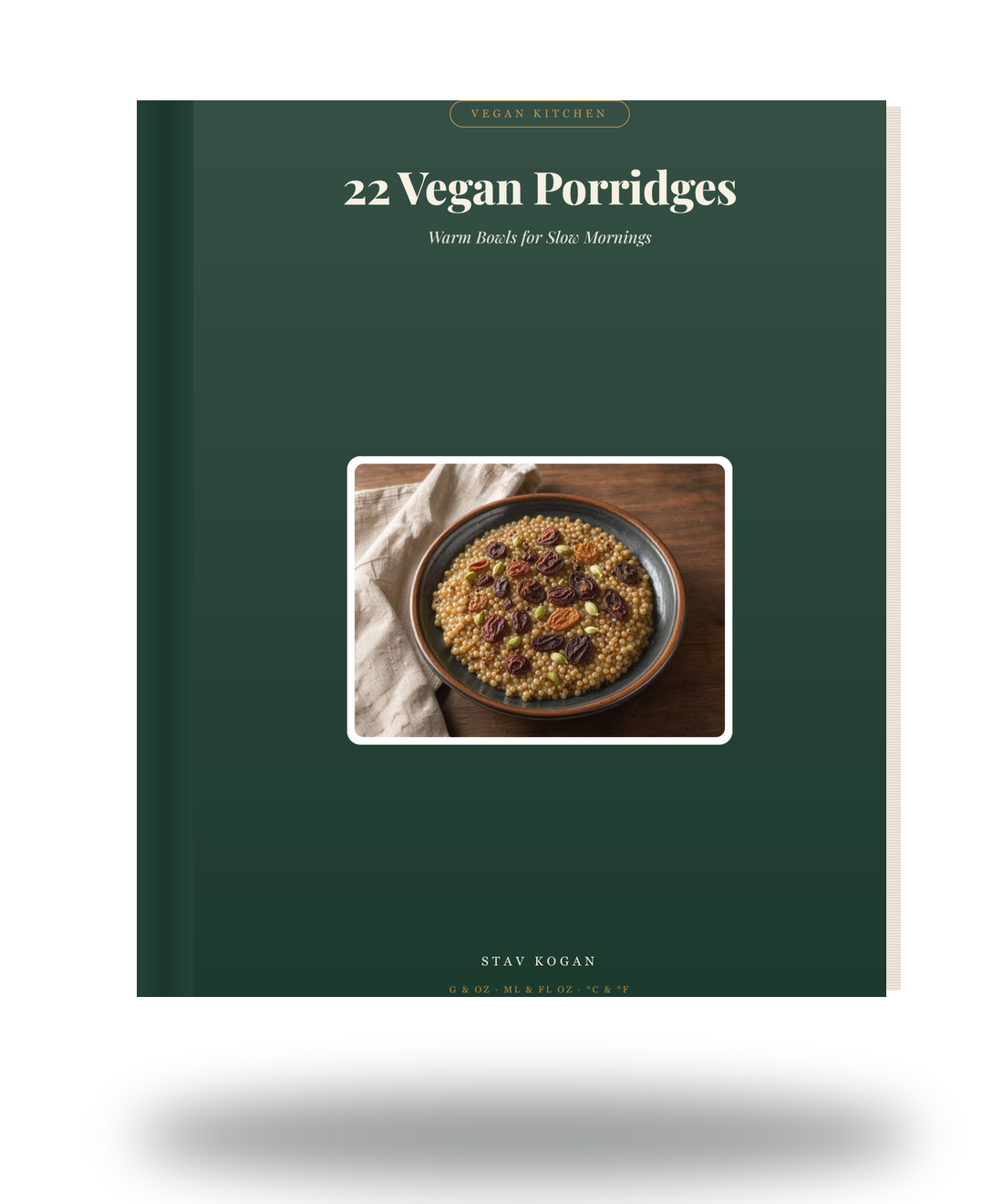
Free e-book
22 Vegan Porridges
22 warm vegan porridge and grain bowls for every course of the day: millet, buckwheat, oats, rice, polenta, and sorghum, from sweet morning bowls to savory dinners. Free, straight to your inbox.
- Every recipe fits on one page: ingredients, plain steps and a photo of the finished dish.
- Dual measurements: grams with ounces, milliliters with fluid ounces, Celsius with Fahrenheit.
- No exotic ingredients: simple pantry basics from any grocery store.
Twelve Plants a Week, One Crisp Bowl
Generous salads pair with a gut-microbiome wellness theme. Colorful, crunchy, and dressed with care, they help everyday meals feel light and complete.
- Rotate greens for fiber range
- Emulsified dressing softens bitterness
Educational culinary & wellness note — not medical advice. Reader-supported links may earn a small commission at no extra cost to you.






0 Comments