Homemade colored noodles are the kind of weekend cooking project that pays off all week: just four pantry ingredients, no eggs, and a beautiful golden color from turmeric or vegetable juice. I started making this vegan pasta recipe when store-bought egg noodles stopped fitting our table, and I have never looked back – the dough comes together in minutes and rolls out like a dream.
This is homemade pasta at its most honest: noodles from scratch. Flour, warm water, a spoon of oil, and any natural food coloring you like: turmeric for sunshine yellow, or carrot, tomato, beet, or spinach juice for deeper hues. Cut the sheet into hand cut noodles for soup or leave thicker strands for a main course, then dry the homemade noodle dough and keep it ready for busy nights.
After testing this vegan noodle recipe many times in my own kitchen, I can promise the texture is silky and springy, closer to fresh pasta than to the dried boxes from the store. Whether you are cooking for kids who love fun colors or prepping egg free noodles for the week, this method is forgiving, cheap, and genuinely satisfying to make by hand.
Why You’ll Love These Homemade Colored Noodles
These homemade colored noodles prove that homemade pasta does not need eggs, special machines, or a long ingredient list. The dough is forgiving: if it feels dry, a few drops of water fix it; if it sticks, a dusting of flour solves that in seconds. Turmeric gives a warm golden look with no artificial colors, and vegetable juices turn the same dough into carrot orange or beet red. The noodles dry beautifully and keep for weeks, so one short session of noodles from scratch gives you several future dinners. It is a calm, tactile recipe that both beginners and confident cooks enjoy.
Storage Notes
Dry the cut noodles in a single layer on a large board or paper for about half a day, turning them from time to time. Store long strands upright in a paper bag and short ones loose in a cloth bag, or use a closed glass container. If you added fresh herbs to the dough, do not seal the container with a lid – cover the opening with parchment paper instead.
Pro Tips
- Knead the dough first with a spoon, then by hand into a smooth ball – this keeps your fingers clean and develops the right structure.
- Roll the dough to one even thickness and dust the sheet generously with flour before cutting, otherwise the layers stick when you fold or roll the sheet.
- Cut the strips about 1 mm thick and 0.15-0.2 in (0.4-0.5 cm) wide for soup, or 0.3-0.4 in (0.8-1 cm) wide for main courses.
- Use warm water at 35-45 °C – it makes the dough noticeably more pliable than cold water.
- For extra color variety, swap the water for carrot, tomato, beet, or spinach juice instead of using turmeric.
FAQ
What can I use instead of turmeric to color the noodles?
Replace the warm water with an equal weight of carrot, tomato, beet, or spinach juice. Each one colors the dough naturally, and you can skip the turmeric entirely if you prefer plain noodles.
How thin should I roll homemade noodle dough?
Aim for strips about 1 mm thick with even pressure across the whole sheet. Thin strips suit soups; slightly wider ones (0.8-1 cm) hold up better in main courses and stir-fries.
Do I have to dry the noodles before cooking?
No. You can cook the fresh strips right away in plenty of salted water. Drying is simply a way to store them – spread them in a single layer and turn them occasionally for about half a day.
Can I make these noodles gluten-free?
The recipe is written for plain wheat flour, which gives the dough its stretch. Gluten-free flour blends behave differently and would need recipe testing with a binding starch, so they are not a simple one-to-one swap here.
Conclusion
There is real joy in noodles from scratch – the feel of homemade noodle dough under your hands, the bright color, the silky bite. These homemade colored noodles work in soups, stir-fries, or simply tossed with oil and herbs. Keep a batch of turmeric noodles and dried noodles on the shelf for busy nights, or color the same dough with vegetable juice. It is an easy vegan pasta recipe and, honestly, one of the calmest half hours you will spend in the kitchen. Once you try hand made noodles, the dried box kind will not compare. For more, try my Easy Lemon Jelly with Agar-Agar. For more, try my Potato Pancakes (Draniki). For more, try my Buckwheat Meatballs in Tomato Sauce.
Recipe Card
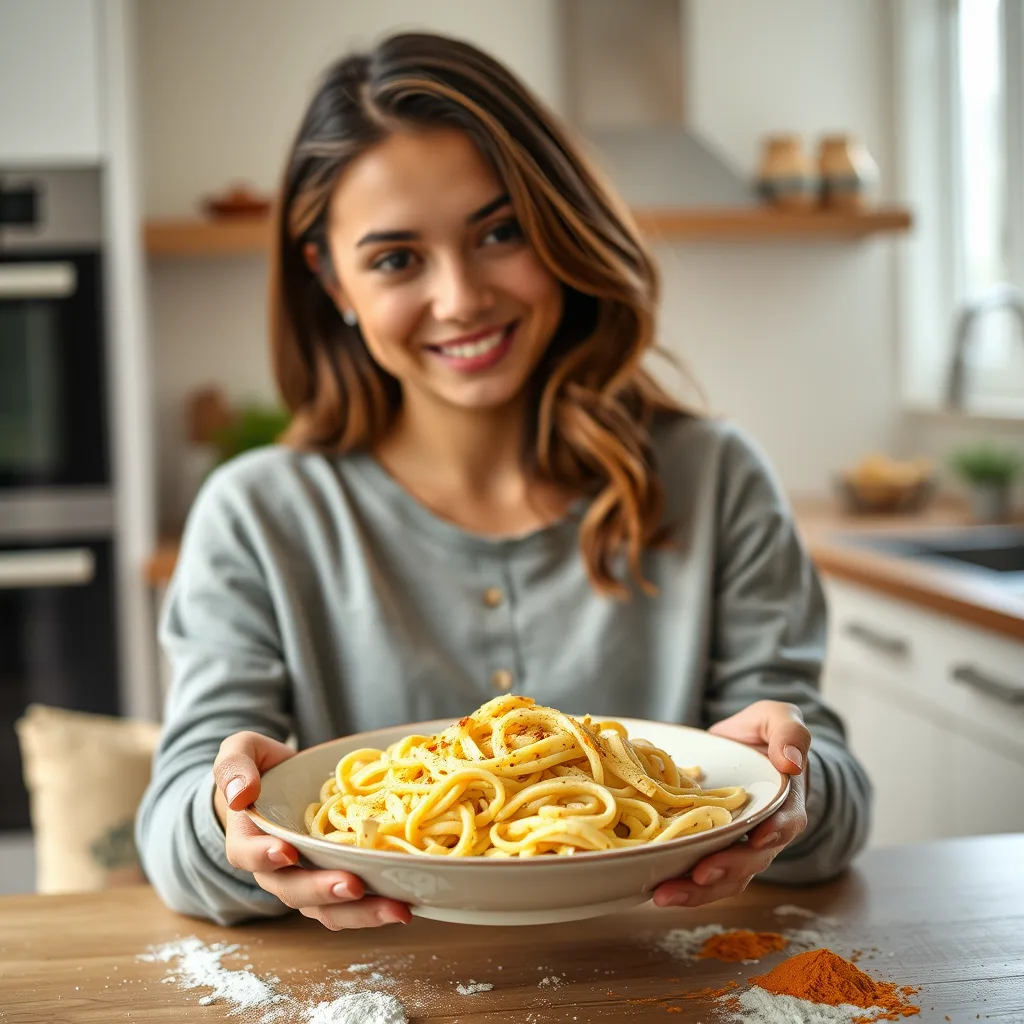
Homemade Colored Noodles With Turmeric
Ingredients
Method
- Mound the flour in a mixing bowl, add the turmeric if using, and stir to combine.
- Make a well in the center and pour in the warm water (35-45 °C) and the vegetable oil.
- Draw the flour into the liquid with a spoon, then knead by hand until the dough forms a smooth ball.
- Cover the dough and set it aside until it cools to room temperature.
- Flour your work surface and roll the dough out into an even layer of uniform thickness.
- Dust the sheet generously with flour so the layers will not stick together.
- Cut the dough into strips - 1 mm thick and 0.15-0.2 in (0.4-0.5 cm) wide for soup, or 0.3-0.4 in (0.8-1 cm) wide for main courses - or fold the sheet and slice across, then unfold the strips.
- Spread the noodles in a single layer on a board or paper and dry for about half a day, turning them from time to time.
Nutrition
Tried this recipe?
Let us know how it was!
Free e-book
22 Vegan Porridges
22 warm vegan porridge and grain bowls for every course of the day: millet, buckwheat, oats, rice, polenta, and sorghum, from sweet morning bowls to savory dinners. Free, straight to your inbox.
- Every recipe fits on one page: ingredients, plain steps and a photo of the finished dish.
- Dual measurements: grams with ounces, milliliters with fluid ounces, Celsius with Fahrenheit.
- No exotic ingredients: simple pantry basics from any grocery store.
Protein-First Mornings, Steady Midday Energy
Breakfasts built on eggs and greens pair well with a morning-vitality theme. They help the day start warm and grounded, with energy that arrives evenly.
- Eggs anchor morning fullness
- Greens add fiber and minerals
Educational culinary & wellness note — not medical advice. Reader-supported links may earn a small commission at no extra cost to you.

0 Comments