Vegetarian kuksi is my favourite kind of summer lunch recipe: a cold noodle bowl that you assemble layer by layer and finish with a bright, no cook sauce. This Korean noodle dish crossed into Russian Far East cooking generations ago, and the version I make is built on rice noodles, gently stewed cabbage and eggplant, chewy soy asparagus and crisp raw vegetables. Every spoonful mixes warm, cool, soft and crunchy textures, which is exactly why this kuksi recipe never gets boring.
The method is friendly to cooks of any level: stew two vegetables, boil the noodles, grate the fresh produce for the cold vegetable sauce, and let everyone build their own bowl. The sauce – tomatoes, peppers, cucumber, radish, herbs, soy sauce and vinegar poured over chilled vegetables – is what turns simple rice noodles into a proper vegan noodle bowl with real personality.
Serve these sesame noodle bowls on a hot day and they disappear fast. It is also a brilliant make-ahead lunch: keep the components separate and this rice noodle salad hybrid stays fresh and lively for hours.
Why You’ll Love This Vegetarian Kuksi
This vegetarian kuksi delivers restaurant-level flavour from ingredients you can find in any supermarket. The noodles soak up the tangy cold vegetable sauce while the stewed cabbage and eggplant add savoury depth and the radish and cucumber keep every bite refreshing. It is naturally a vegan noodle bowl, it feeds four people for very little money, and it is endlessly adaptable – swap in whatever crisp vegetables are in season. Best of all, most of the work happens before you eat, so this Korean noodle dish is stress-free entertaining food: set out the bowls and let guests build their own sesame noodle bowl.
Storage Notes
Компоненты (лапша, тушёные овощи, соус) хранить отдельно и собирать перед подачей — по логике исходника (сборка порционно в тарелках), решено автономно (2026-10-20).
Pro Tips
- Cut the eggplant small and stew it patiently until silky – undercooked eggplant sponges up oil and ruins the texture of the bowl.
- Rinse the boiled rice noodles under cold water so they stop cooking and stay springy instead of sticky.
- Grate the cucumbers and radish into long strips rather than dicing them – they tangle with the noodles and carry the sauce better.
- Marinate the rehydrated soy asparagus in a splash of soy sauce first; it is bland straight from the soak and this fixes it.
FAQ
What is kuksi?
Kuksi is a cold Korean noodle dish that became popular in the Russian Far East: wheat or rice noodles served cold with vegetables and a tangy broth or sauce. This vegetarian kuksi version uses rice noodles and a fresh vegetable sauce with soy sauce and vinegar.
What is soy asparagus?
Soy asparagus (bean curd sticks or yuba) is dried tofu skin with a pleasantly chewy texture. Soak it until soft, rinse well, then marinate in soy sauce before adding it to the bowls.
Can I make kuksi ahead of time?
Yes. Cook the noodles, stew the vegetables and mix the sauce up to a day ahead, but store them separately and assemble the bowls just before serving so nothing gets soggy.
Is kuksi served hot or cold?
Kuksi is served cold or at room temperature – the noodles, the raw vegetable sauce and the chilled toppings are the whole point of the dish on a warm day.
Conclusion
Once you have tried this kuksi recipe you will understand why cold noodle bowl meals have such a devoted following. The combination of chewy soy asparagus, tangy cold vegetable sauce and soft stewed vegetables makes this rice noodle salad hybrid far more exciting than a plain vegan noodle bowl. Keep it in your summer lunch recipe rotation, play with the crunchy toppings, and enjoy a Korean noodle dish that is as fun to assemble as it is to eat. For more, try my Tofu Omelette with Spinach & Sun-Dried Tomatoes. For more, try my Potato Pancakes (Draniki). For more, try my Sorrel Soup with Beans and Jerusalem Artichoke. For more, try my Spicy Tomato Soup with Chickpeas. For more, try my Vegan Borscht. For more, try my Vegetable Soup with Tofu. More ideas in my vegan soups.
Recipe Card
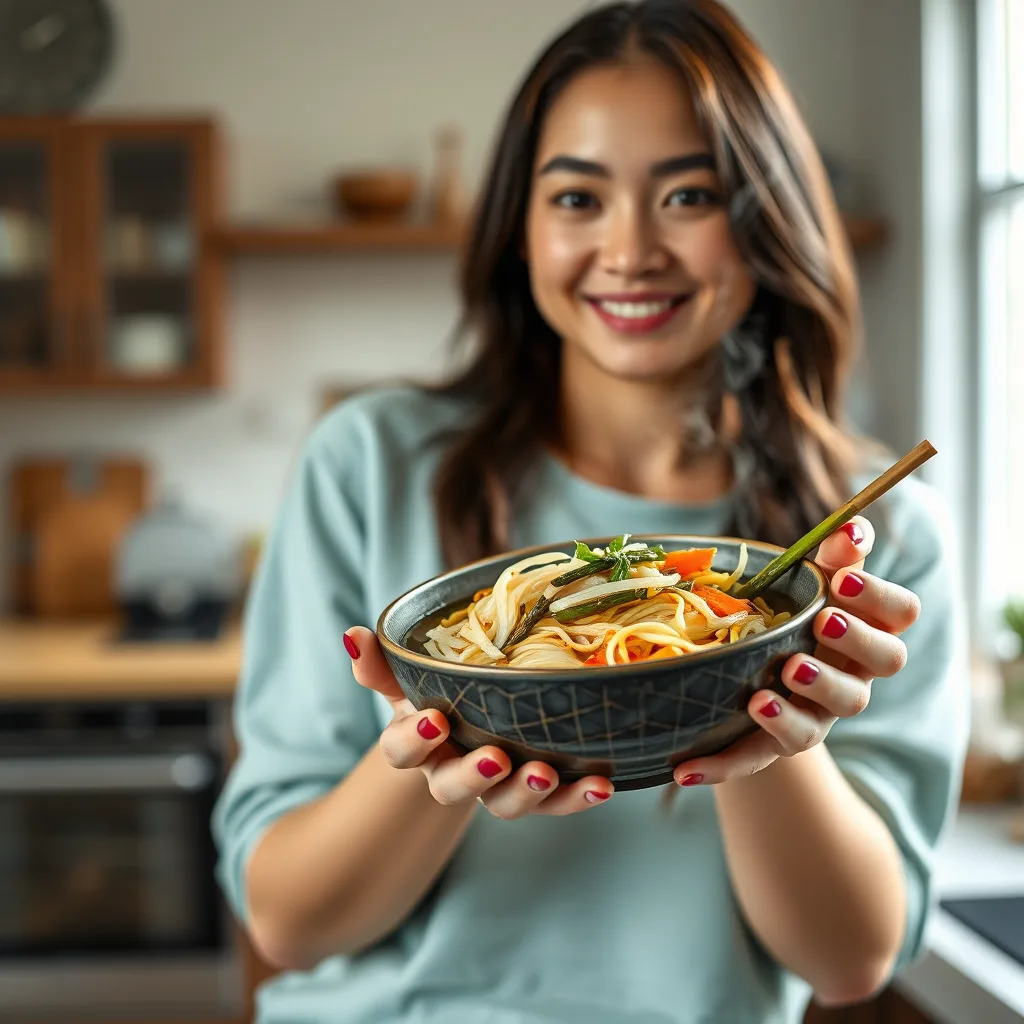
Vegetarian Kuksi Cold Noodle Bowls
Ingredients
Method
- Shred the cabbage finely and cut the eggplant into small pieces.
- Stew the cabbage and eggplant in the vegetable oil over medium heat, seasoning with salt and spices to taste; set aside.
- For the sauce, finely chop the tomatoes and sweet pepper and grate the cucumbers and radish into long strips.
- Finely chop the herbs, put all the fresh vegetables into cold water and stir in the soy sauce, vinegar and ground red pepper.
- Boil the rice noodles in the water until tender, then drain and rinse under cold water.
- Pre-soak the dried soy asparagus in hot water until soft, rinse well, then marinate in a small amount of soy sauce.
- Assemble the bowls in deep plates: noodles on the bottom, stewed cabbage and soy asparagus on top, pour over the cold vegetable sauce and sprinkle with sesame seeds.
Nutrition
Tried this recipe?
Let us know how it was!
Free e-book
22 Vegan Porridges
22 warm vegan porridge and grain bowls for every course of the day: millet, buckwheat, oats, rice, polenta, and sorghum, from sweet morning bowls to savory dinners. Free, straight to your inbox.
- Every recipe fits on one page: ingredients, plain steps and a photo of the finished dish.
- Dual measurements: grams with ounces, milliliters with fluid ounces, Celsius with Fahrenheit.
- No exotic ingredients: simple pantry basics from any grocery store.
Twelve Plants a Week, One Crisp Bowl
Generous salads pair with a gut-microbiome wellness theme. Colorful, crunchy, and dressed with care, they help everyday meals feel light and complete.
- Rotate greens for fiber range
- Emulsified dressing softens bitterness
Educational culinary & wellness note — not medical advice. Reader-supported links may earn a small commission at no extra cost to you.




0 Comments